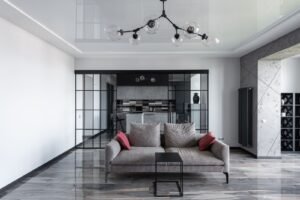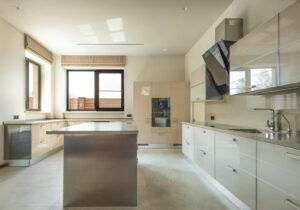
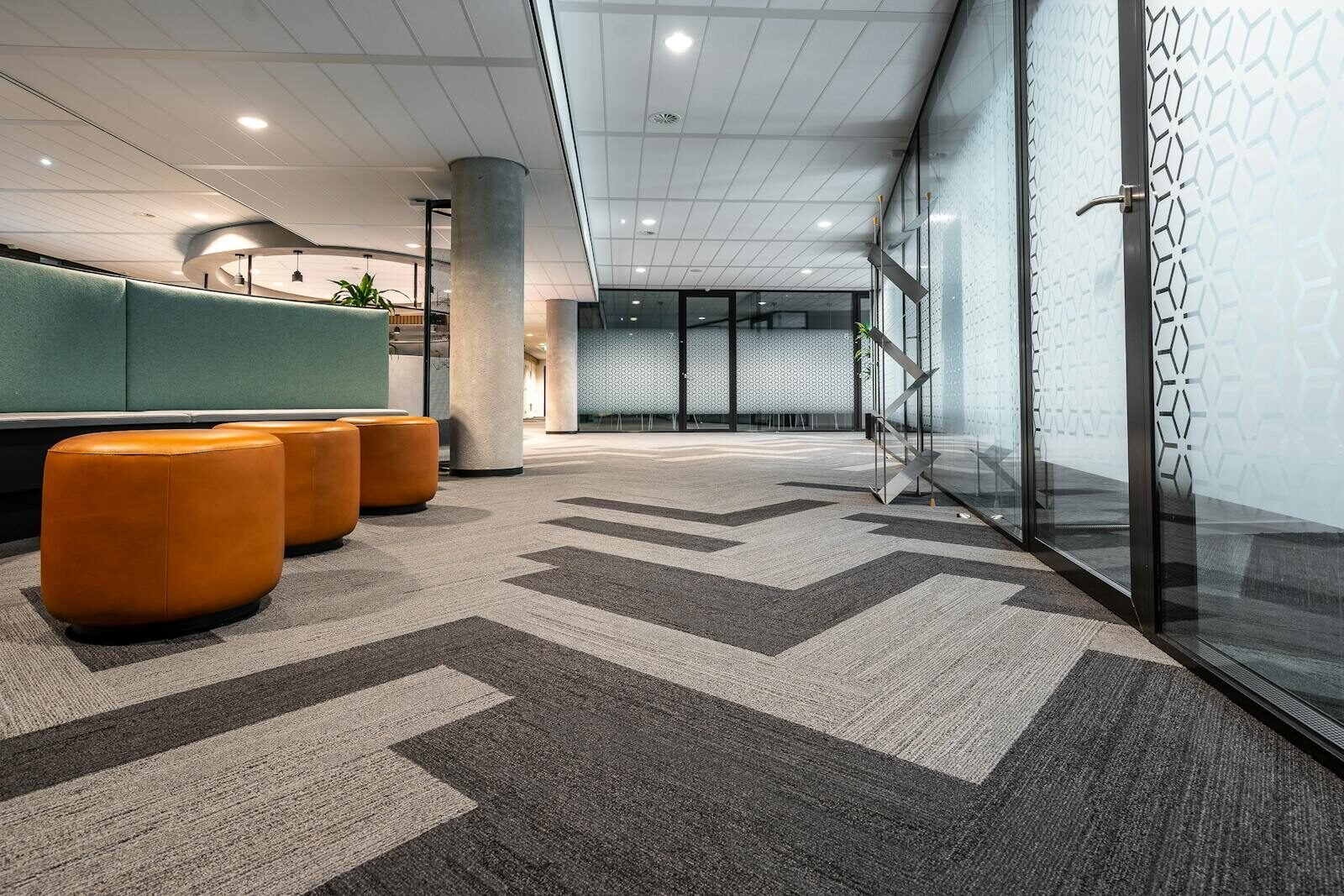
Come into any well-designed hotel lobby, open-plan office or restaurant that draws you in for longer than planned, and something is immediately evident: lighting feels just right, movement through the space is intuitive and materials and colors create an atmosphere that serves its purpose without drawing undue attention – that invisible intelligence is commercial interior design done well.
Commercial interior design is one of the most complex and rewarding disciplines within built environments, involving spatial planning, materials science, building codes, human behavior research, brand strategy development and aesthetic judgement to craft spaces that serve specific human and business needs at scale. Learning how to design commercial interiors involves understanding all of these facets beyond visual considerations alone.
This guide outlines the entire process, from initial brief to completed space, including five key phases every commercial project undergoes and core design principles that distinguish great from mediocre commercial interior designs in 2026.
What Is Commercial Interior Design?
Commercial interior design is the design of interior spaces in buildings used for business, hospitality, retail, healthcare, education, and other non-residential purposes. It encompasses everything from a small professional office to a large hotel, from a single retail store to a multi-floor corporate headquarters.
Commercial interior design does not only refer to for-profit spaces. Schools, hospitals, government buildings, and civic facilities all fit under this classification because they share one key feature that defines it: these spaces must serve multiple users for specific functions rather than being created solely to accommodate one household’s preferences.
Commercial interior design differs significantly from residential in several fundamental ways. Building codes tend to be more stringent and accessibility requirements under ADA or equivalent standards are often more stringent. Fire egress, material flammability ratings, structural load considerations for built-in elements and coordination between HVAC, electrical and plumbing systems all play a much bigger part than in residential work; additionally the timeline from brief to completion may take longer with more stakeholders involved and an often higher budget being scrutinized per square foot.
Commercial Design Meaning: Types of Spaces
Commercial interior design covers a diverse range of space types. Each has its own functional requirements, design conventions, and user experience priorities.
Office and corporate interiors focus on productivity, collaboration, and brand expression. Open plan workspaces, focus rooms, meeting suites, reception areas, and breakout spaces all play important roles within an office environment; with recent shifts toward activity-based working schedules increasing complexity while simultaneously increasing interest.
Retail interiors are created to guide customers through a purchasing journey. Visual merchandising, traffic flow and lighting that makes products appealing require careful spatial planning; fitting rooms and checkout zones also need careful consideration when planning interior design. At the same time, every material, color and fixture choice must reflect brand identity of each retailer.
Hospitality interiors — hotels, restaurants, bars and spas must offer guests unique emotional experiences. A luxury hotel lobby communicates arrival and status; casual restaurants create ease and appetite; spas promote calm. consistently indicates the impact of healthcare environments on patient outcomes; soothing colors, natural lighting, user-friendly navigation features, and effective acoustic designs all help create healing environments that serve both staff and patients well.
Education interiors should foster learning, collaboration, and focus across age ranges and subject areas. Flexible furniture, acoustic zoning and appropriate scale for age groups are always top of mind when creating stimulating yet non-distracting environments in education facilities.
The Five Key Phases of Commercial Interior Design
Every commercial interior design project, regardless of size or type, follows an established path through multiple stages. Understanding these stages provides both designers and clients with an idea of what lies ahead as they anticipate each step in the design process.
Phase 1: Programming and Brief Development
The initial phase of any project entails defining its goals. A designer works alongside their client to understand their organization’s culture, brand, operational requirements, user demographics, adjacency requirements between spaces, and vision for the final environment.
This phase culminates in a written program a document outlining every area in the project, its required area, functional relationships to adjacent spaces, user groups served, performance requirements and user groups served. For example, for a corporate office, this may include detailing individual workstations, collaborative zones, meeting rooms of various sizes, as well as reception capacity requirements, server room requirements, and staff amenities.
Programming is often seen as the least glamorous part of commercial interior design and often given short shrift. Yet this phase can have significant ramifications on project value; an effective program may prevent costly design changes later if an essential spatial need comes to light after approval of an initial layout plan has already been submitted for review and approved.
Phase 2: Schematic Design
Once the program has been established, a designer creates initial spatial concepts using schematic design. Schematic design investigates how space can be organized to meet program requirements through testing various approaches to layout, circulation, zoning and main design ideas or concepts.
At this stage, drawings should be intentionally loose and exploratory. Floor plan sketches, section studies, precedent imagery, and concept diagrams all help communicate a designer’s spatial thinking without prematurely locking in decisions. Key questions addressed at this point include where the primary entrances and circulation routes are; how public and private zones are separated; what relationship exists between this space and the building envelope (windows, columns, ceiling heights, etc.); etc.
Schematic design presentations allow clients to provide feedback on the overall organizational and conceptual direction before proceeding with more in-depth work.
Phase 3: Design Development
Once a schematic direction has been approved, design development refines every decision into greater granularity. Floor plans, reflected ceiling plans, elevations, and sections are refined until all major decisions have been resolved; material palettes, furniture selections, lighting strategies, and custom elements have all been defined.
This phase requires coordination with multiple disciplines. Structural engineers need to verify that built-in elements can be supported while mechanical engineers ensure HVAC ductwork routes properly, electrical engineers coordinate power and data requirements for furniture layouts, and lighting designers generate photometric calculations.
Design development drawings must be detailed enough for contractors to provide budget estimates and cost reviews at this stage, in order to prevent expensive value engineering due to creating construction documents based on budget estimates that were never verified against design.
Phase 4: Construction Documentation
Construction documentation includes all drawings and specifications necessary for pricing and building a project, from prices and costs to schedules and timelines. Construction documents should be clear, precise, complete, coordinated across disciplines, without ambiguities or discrepancies that lead to requests for information during construction that could delay progress and increase cost.
Building an efficient commercial interior begins with comprehensive construction documentation. It must describe not just what’s being built, but also the process behind its creation: materials used and their thickness/configuration/joining points, how lighting fixtures are mounted and millwork constructed; all this must be documented for success.
Phase 5: Construction Administration
As construction advances, the designer’s role evolves from oversight and problem solving to oversight and problem resolution. Routine site visits ensure work is being constructed according to plan. Submittals submitted by contractors for review against design intent are assessed for changes caused by site conditions, product availability, or client requests; any deviations are evaluated and documented accordingly.
Construction administration is the phase most closely tied to the final quality of any completed space. A designer who remains engaged and responsive during this stage can detect problems early, maintain design intent with necessary changes, and ensure that the final space matches their vision developed in earlier phases.
Core Principles of Commercial Interior Design
Effective commercial interior design goes beyond merely adhering to a set of five phases and procedures. Instead, effective designs follow an ongoing set of principles that distinguish spaces that truly work from those that simply exist.
Human Factors and Ergonomics
Commercial spaces must accommodate the diverse people who use them, including desk height, corridor widths, sight lines, acoustic conditions, thermal comfort levels and lighting levels that affect how people experience and perform in each space. Human factors research provides evidence-based guidance for all these parameters – neglecting it can result in spaces which feel wrong but cannot always articulate why.
Wayfinding and Legibility
A commercial space must be easily navigable without explicit instructions from its users, with visitors quickly being able to orient themselves quickly and understand where they need to go based on spatial sequence, visual landmarks within it, signage placement and design language used throughout. This legibility stems from these factors as well as consistent design language throughout.
Poor wayfinding leads to frustration, missed meetings and late customers as well as the impression that a space is more complicated than necessary. On the other hand, excellent wayfinding should remain hidden so users find their way effortlessly.
Acoustic Design
Open plan offices where every conversation is audible have become well-documented productivity and wellbeing issues; restaurants with loud conversations that require shouting tend to turn customers off regardless of excellent food offerings; healthcare facilities where conversations across corridors compromise patient privacy while undermining healing are another prime example of such issues.
Acoustic design in commercial spaces involves controlling reverberation through absorbent surfaces, managing sound transmission between spaces with appropriate partitioning solutions and creating zones which meet both activity level and privacy requirements of various areas.
Lighting Design
Light is one of the most powerful elements in commercial interior design. It serves to define space, set mood, guide movement, support task performance and impact biological rhythms – with natural light linked with improved mood, productivity and health outcomes in commercial settings.
An effective commercial lighting strategy encompasses ambient illumination for general purposes, task illumination for focused tasks, accent lighting for spatial interest and display purposes, as well as daylight integration through window placement, glazing selection and solar shading design.
Sustainability and Material Selection
Material selection in commercial interiors has significant environmental, health, and maintenance ramifications. Low-VOC paints and finishes are key for improving indoor air quality while materials with recycled content reduce embodied carbon of fit-outs. Durable materials with long service lives reduce replacement frequency as well as waste produced; additionally specifying EPDs allows quantified comparison of environmental impact.
By 2026, sustainability will no longer be seen as an extra consideration in commercial design; rather it has become an expectation from most institutional clients and many corporate occupiers, driven by ESG commitments and health awareness initiatives.
Commercial Interior Design Examples
Making principles clearer with concrete examples from multiple spaces makes learning how they apply easier.
Open plan corporate office: A technology company’s headquarters uses an activity-based working model with no assigned desks. Quiet focus zones with acoustic panels and individual seating alternate with collaborative zones featuring soft seating and writable walls. A central café connects the two typologies and functions as the social heart of the floor. Exposed services ceilings with direct-indirect pendant lighting provide flexibility for future layout changes.
Independent restaurant: A 60-cover restaurant uses a split-level layout to create spatial variety without physical division. Banquette seating along one wall provides the privacy diners prefer for conversation. Acoustic baffles suspended from the ceiling break up reverberation without compromising the open feel. Warm Edison-style pendants above tables provide intimate task lighting against a cooler ambient system for general illumination.
Medical clinic: A primary care clinic uses a single-corridor layout with examination rooms on one side and administrative functions on the other. The waiting area receives natural light from a full-height glazed end wall. Biophilic elements including planting and natural material finishes reduce the clinical anxiety associated with healthcare environments.
How to Incorporate Commercial Interior Design Principles in Smaller Spaces
Commercial interior design principles apply beyond large corporate projects. Small professional offices, boutique retail stores, and independent restaurants benefit from the same thinking at a smaller scale.
Zoning without walls. Use changes in ceiling height, flooring material, or lighting level to define different activity zones within an open space. This creates the spatial structure of a larger commercial environment without the construction cost of partition walls.
Acoustic investment. Even in a small space, targeted acoustic treatment — a suspended baffle, upholstered panels, or a carpet zone — meaningfully reduces reverberation and makes the space feel more considered and comfortable.
Lighting layers. Replace a single overhead light source with three layers: ambient, task, and accent. The investment is modest. The spatial quality improvement is significant.
Flexible furniture. Specify furniture that can be reconfigured as needs change. Tables that can be combined or separated, stackable chairs, and mobile storage units give small commercial spaces adaptability that fixed built-in solutions cannot provide.
For more practical guidance on interior design decisions at every scale, the interior design section at Home Narratives covers design principles, material choices, and spatial ideas across residential and commercial contexts.
The American Society of Interior Designers provides professional standards, research resources, and career guidance for anyone working in or entering the commercial interior design field.
Commercial Interior Design Salary and Career in 2026
It offers a career path with genuine range across specialization, seniority, and geography.
Commercial interior design salary varies by experience, location, and employer type. Entry-level designers typically earn $40,000 to $55,000 annually. Mid-level designers with three to seven years of experience in commercial projects typically earn $55,000 to $80,000. Senior designers and project managers reach $80,000 to $120,000. Principal and partner level at established firms can exceed $150,000, with significant variation by market.
New York, San Francisco, Los Angeles, Chicago, and other major commercial real estate markets consistently offer higher salaries reflecting both higher cost of living and greater project volume. Remote work has somewhat increased salary accessibility for designers in smaller markets working for larger firms.
Commercial interior design degree routes typically include a four-year bachelor’s degree in interior design or interior architecture from an accredited program, followed by the NCIDQ examination for professional licensure. Many commercial design practitioners also hold master’s degrees, particularly those specializing in healthcare, workplace strategy, or sustainable design.
Commercial interior design jobs in 2026 are distributed across interior design firms, architecture firms with interior design studios, corporate real estate departments, hospitality companies with in-house design teams, retail chains with standardized store design programs, and healthcare systems that manage their own facility design.
The field is evolving rapidly. Workplace strategy, experience design, and biophilic design are growing specializations within commercial interior design.
Frequently Asked Questions
What are the five phases of commercial interior design?
Programming and brief development, schematic design, design development, construction documentation and administration are the five key steps of interior design process. Each phase builds upon itself to produce specific deliverables: Programming establishes what the space must achieve while schematic design explores spatial concepts before design development refines all decisions before construction documentation produces build drawings and specifications and construction administration oversees build processes to preserve design intent.
What is the difference between commercial and residential interior design?
Commercial interior design involves designing spaces used by multiple people for business or institutional functions. As such, commercial design must meet more stringent building codes, stricter accessibility requirements, greater coordination with engineering disciplines and complex stakeholder management than residential design does. Residential design caters more directly to individual households’ preferences in less prescriptive spaces, yet many designers work both sectors; their skillset, toolsets and processes vary significantly between them.
What degree do you need for commercial interior design?
Commercial interior designers typically possess four-year accredited bachelor’s degrees in interior design or architecture from an accredited institution. Professional licensure through the NCIDQ examination requires both education and work experience to qualify; some practitioners enter through architecture degrees with a specialty in interior design. Further specialization through continuing education courses on sustainable design, workplace strategy or healthcare design offers career advancement in specialized sectors.
What does a commercial interior designer earn?
Entry-level commercial interior designers usually earn between $40k and $55k; mid-level designers with several years of commercial project experience can make $55,000-80k; senior designers/project managers typically reach 80,000 to 120,000; principals at established firms can exceed 150K per annum in compensation; with metropolitan markets typically providing higher pay due to project volume and cost of living considerations.
What are some examples of commercial interior design?
Commercial interior design examples span from corporate offices, hotels and resorts, restaurants and bars, retail stores, healthcare facilities, educational buildings, airports and civic spaces – each type has unique functional requirements, user experience priorities and design conventions; so while corporate headquarters may employ similar design principles than boutique hotels do – they must still apply these according to each space’s purposes and users.
Commercial interior design is a discipline dedicated to crafting spaces where most people spend most of their working and social lives, from offices and workstations, to restaurants and social gatherings. When done well, it can significantly enhance productivity, wellbeing, brand perception and business performance – benefits which mediocre designs consistently fail to deliver on. A five-phase process provides the framework; core principles provide design intelligence; while research into how physical environments influence human behavior forms the evidence base that elevates commercial interior design beyond decoration into true problem-solving solutions.
No matter whether you are entering the design field as a designer, planning an office fit-out, or simply curious about how the spaces that define daily life come to be designed and constructed, understanding commercial interior design’s principles and processes can change how you perceive and evaluate our built environment.
Article written for Home Narratives — practical guidance for better living spaces.